True Temperature Alarm Issue
True High Temp Alarm Repair in NYC
If your True cooler or freezer is showing HA or thi, the cabinet is telling you it has been running too warm for too long. On commercial reach-ins in New York kitchens, that warning usually starts with condenser dirt, blocked airflow, or a door-seal problem before it moves into fans, probes, defrost parts, or the sealed system.
This page stays narrow on the high-temp alarm itself so you can separate a maintenance issue from a real refrigeration repair.
Licensed and insured. Certified technicians. Same-day and next-day service when scheduled in advance. Extended availability includes weekends, holidays, evenings, and nights.
What We Check First
HA on Dixell and thi on LAE are real high-temperature alarms, not generic warning lights.
The first documented cause to rule out is a condenser coil loaded with grease, flour, and dust.
If the cabinet is still warm after safe airflow and door-seal checks, the repair path moves toward fans, probes, defrost parts, or deeper cooling faults.
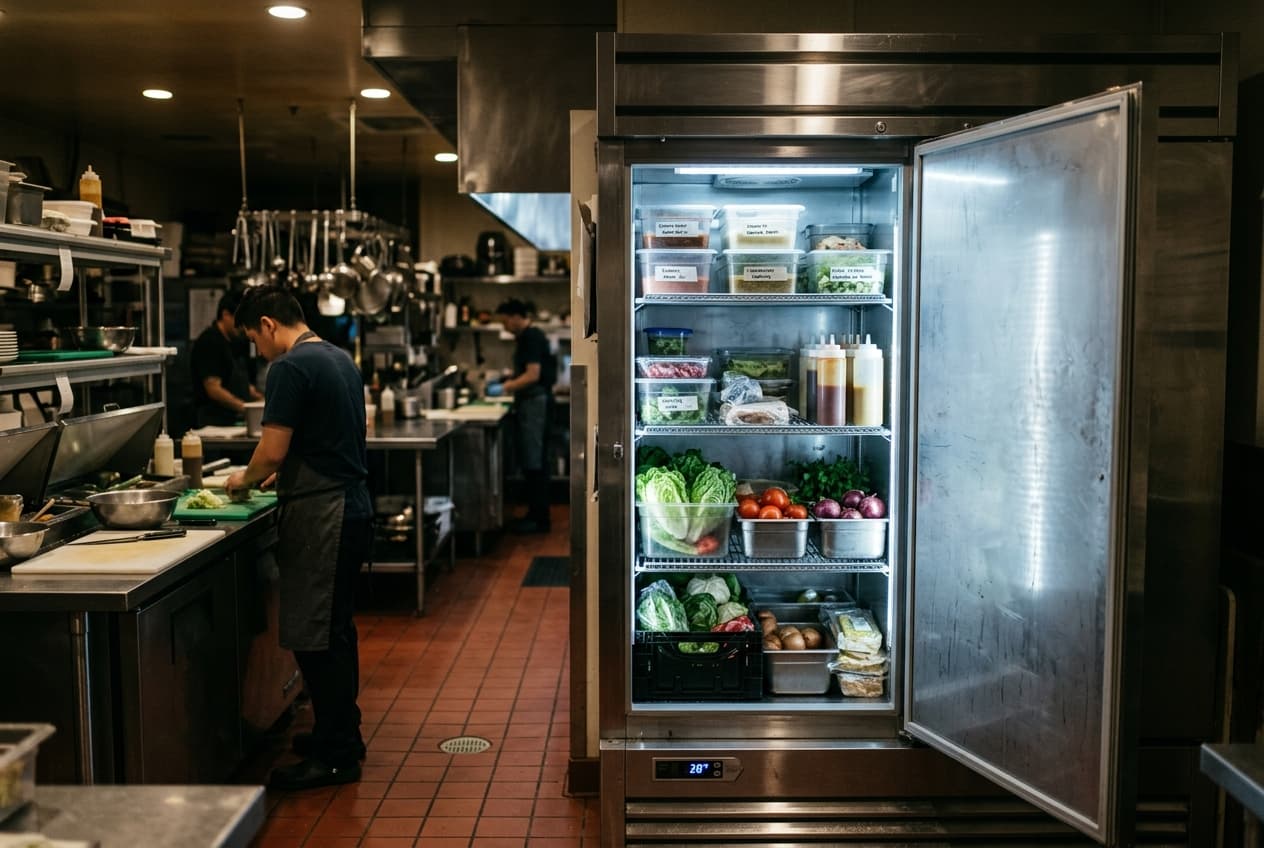
Quick Answer
A True high temp alarm means the cabinet has exceeded its allowed high-temperature limit, and the most common documented cause is a condenser coil that cannot shed heat because it is packed with grease, flour, and dust. The same warning can also come from bad door gaskets, blocked internal airflow, iced-over evaporator coils, failed fan motors, a bad cabinet probe, or a weak sealed system that cannot hold food-safe temperature.
Common Causes of a True High Temp Alarm
These are the documented causes tied to this exact warning on commercial True equipment. The point is to keep the diagnosis tight instead of treating every warm cabinet like the same failure.
Dirty condenser coils
This is the most common documented cause. In commercial kitchens, grease, flour, and dust coat the condenser coils fast. Once the unit cannot release heat normally, compressor temperatures rise and the cabinet starts drifting above safe holding temperature.
Worn or damaged door gaskets
Commercial doors open constantly, and the gaskets take that abuse first. A split or worn gasket lets hot kitchen air and humidity leak into the cabinet, which makes the refrigeration system work harder and pushes temperatures up.
Iced-over evaporator coils
If the evaporator coils behind the interior panels freeze over, airflow gets choked off. The documented causes behind that frost condition are failed defrost heaters, failed defrost timers, or evaporator fan motor failure.
Blocked internal airflow
Overstuffing the cabinet with pans or stacking boxes against the evaporator fans or return vents prevents cold air from circulating where it needs to go. The unit may still run, but product temperature climbs and the alarm follows.
Condenser or evaporator fan motor failure
If either fan stops moving air, normal heat exchange breaks down immediately. That can trigger a high-temperature warning quickly because the cabinet cannot pull heat out or move cold air through the box correctly.
Refrigerant leaks or a weak compressor
Physical damage to refrigerant lines or wear on compressor valves can leave the system unable to maintain food-safe temperatures. This is the deeper cause category when cleaning and airflow checks do not explain the alarm.
True Codes Tied to a High Temperature Alarm
These are the real documented controller codes connected to this symptom. The code tells you what the control sees, but not which physical cause underneath it is creating the temperature rise.
HA
Meaning: High Temperature Alarm on Dixell controllers. The cabinet temperature exceeded the high setpoint limit for the configured duration.
When service is needed: Service is needed when coil cleaning, airflow clearing, and door-closing checks do not stop the alarm from returning or the cabinet is still running warm.
thi
Meaning: High Temperature Alarm on LAE controllers. It stands for Temperature High Internal.
When service is needed: Service is needed when the cabinet keeps posting thi after safe airflow and gasket checks or the unit is not recovering to holding temperature.
P1 / E1
Meaning: Cabinet probe failure. Dixell uses P1 and LAE uses E1 when the main cabinet temperature sensor probe is not communicating correctly.
When service is needed: Service is needed because correct cooling control is disabled when the main temperature probe has failed.
DIY-Safe Checks vs. When to Call a Professional
DIY-Safe Checks
- Cleaning the condenser coils with a stiff brush and vacuum after unplugging the unit.
- Checking for food pans or boxes blocking the interior fan grills.
- Inspecting door gaskets for tears and cleaning them with warm soapy water.
- Verifying the door is closing completely and latching.
Professional Repairs
- Troubleshooting and replacing failed evaporator or condenser fan motors.
- Diagnosing and replacing failed defrost control components or heater coils.
- Replacing Dixell or LAE temperature probes.
- Performing sealed-system diagnostics, leak testing, and refrigerant recharging.
Frequently Asked Questions About True High Temp Alarms
true freezer high temp alarm ha
The direct answer is that HA on a True unit with a Dixell controller means the cabinet temperature rose above the high alarm setpoint long enough to trigger a real high-temperature warning. The most common documented cause is a condenser coil packed with kitchen grease, dust, or flour, but the same alarm can also come from blocked interior airflow, bad door gaskets, iced-over evaporator coils, failed fan motors, or a sealed-system cooling problem.
true cooler controller showing thi
The direct answer is that thi on a True unit with an LAE controller means a high internal temperature alarm. That tells you the cabinet is running warmer than it should, not why, so the next step is separating a dirty condenser, airflow restriction, gasket leak, frost blockage, fan failure, probe fault, or deeper refrigeration issue before parts get blamed.
Schedule True Refrigeration Service
Need True High Temp Alarm Repair in NYC?
If your True reach-in, freezer, or cooler is alarming and not holding temperature, contact AM Profs Inc for diagnosis and repair across all four boroughs. The goal is to identify whether the warning started with maintenance, airflow, controls, or a deeper refrigeration problem before more product is put at risk.
Licensed and insured. Certified technicians. Same-day and next-day service when scheduled in advance. Extended availability includes weekends, holidays, evenings, and nights.